1914
Born in Aomori City, Aomori Prefecture, Japan.
1931
While attending Aomori Middle School, Sekino joined *Ryokuju-mu*, a printmaking coterie magazine founded by fellow students. He began producing woodblock prints during this period.
1932
Graduated from Aomori Middle School. He began studying copperplate printmaking and lithography under Kon Junzō, a painter and printmaker based in Aomori.
1935
His work was accepted for the Teiten, the government-sponsored annual exhibition.
1938
Became a member of the Japan Print Association.
1939
Moved to Tokyo and became a pupil of Onchi Kōshirō, one of the leading figures of the *sōsaku hanga* (creative print) movement. He participated in Onchi's *Ichimokukai* (First Thursday Society), a group devoted to the study and exchange of printmaking.
1951
Established the Kasōchō Copperplate Print Research Studio at his home in Kōenji, Tokyo. Together with artists including Komai Tetsurō, he contributed to the development of modern copperplate printmaking in postwar Japan and helped instruct younger artists.
1953
Began participating in international print exhibitions, including the International Biennial of Graphic Art in Lugano.
1958
Travelled to the United States at the invitation of the Japan Society and gave lectures and demonstrations on Japanese woodblock printmaking. He subsequently travelled through Europe. His experiences abroad encouraged him to reconsider and reinterpret Japanese landscapes from a fresh perspective.
1961
Received a Special Prize at the International Biennial of Graphic Arts in Ljubljana.
1963
Returned to the United States at the invitation of the Ford Foundation and taught printmaking.
1969
Visited the United States again at the invitation of Oregon State University and continued his teaching and artistic activities there.
1974
Completed his major series *Fifty-Three Stations of the Tōkaidō*, consisting of 55 prints. He subsequently produced the *Oku no Hosomichi* series, consisting of 60 prints.
1975
Received the Minister of Education, Science and Culture's Art Encouragement Prize.
1981
Received the Medal with Purple Ribbon from the Government of Japan.
1988
Died in Tokyo at the age of 73.
Biography
Jun'ichirō Sekino was one of the leading Japanese printmakers of the twentieth century and an important figure in the postwar development of the *sōsaku hanga*, or creative print, movement.
Born in Aomori in 1914, Sekino developed an interest in printmaking while still a student. He studied woodblock printing as well as copperplate and lithographic techniques, and in 1939 moved to Tokyo, where he became a pupil of Onchi Kōshirō, a central figure in the *sōsaku hanga* movement.
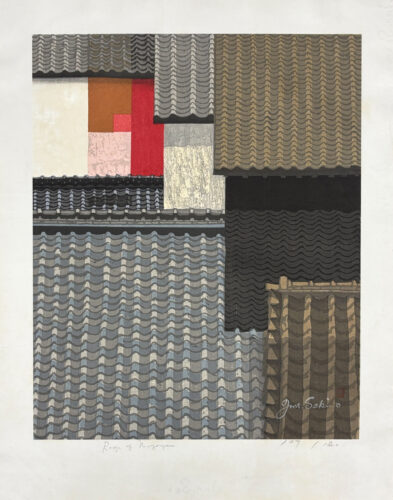
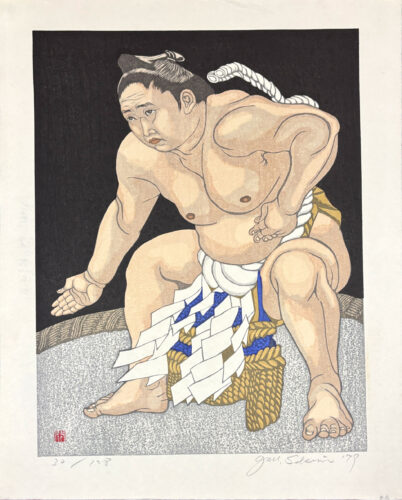
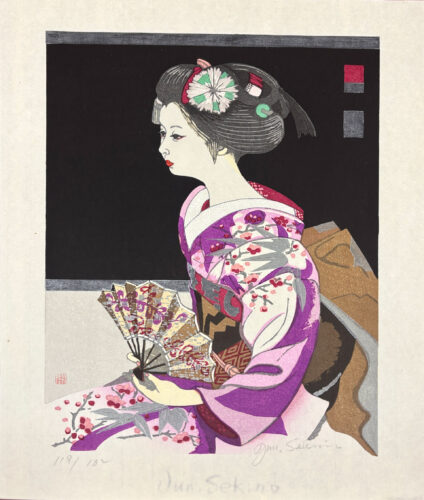
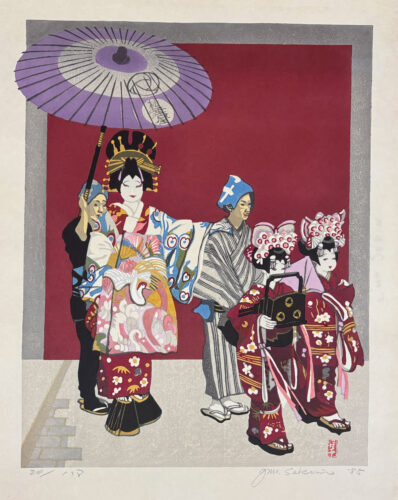
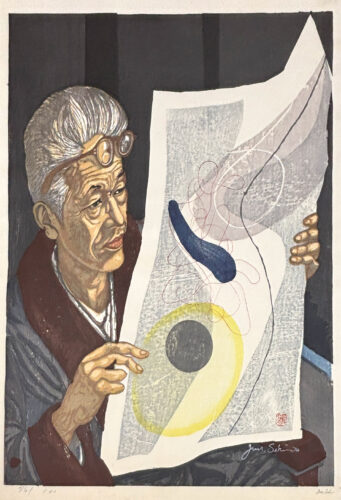
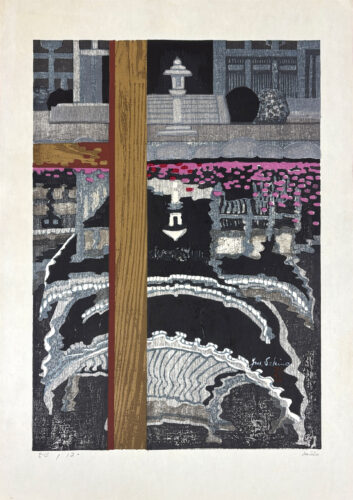
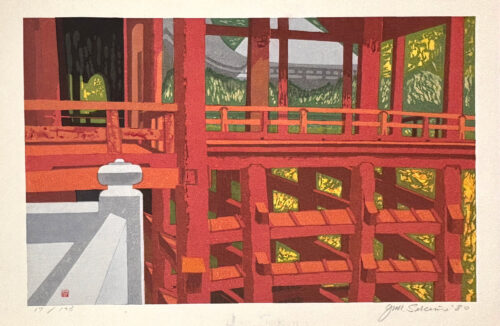
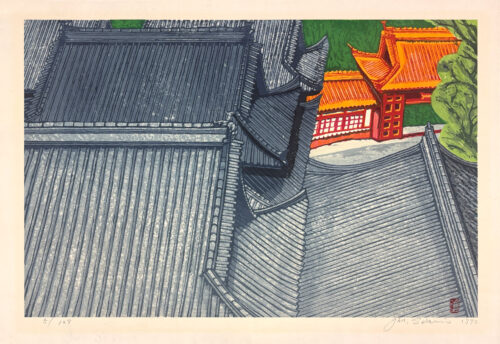
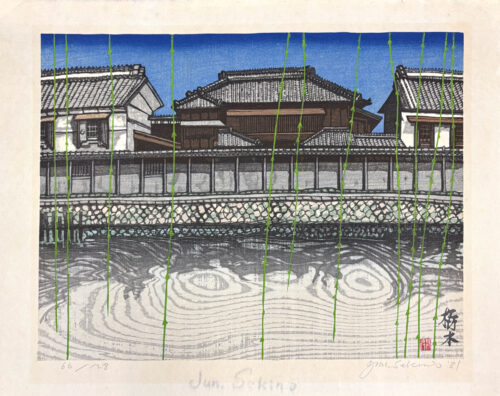
Sekino worked across a range of printmaking techniques, including woodblock, copperplate, and lithography. Rather than limiting himself to the distinction between figurative and abstract art, he developed an individual visual language characterized by bold colors, dynamic compositions, simplified forms, and expressive distortions.
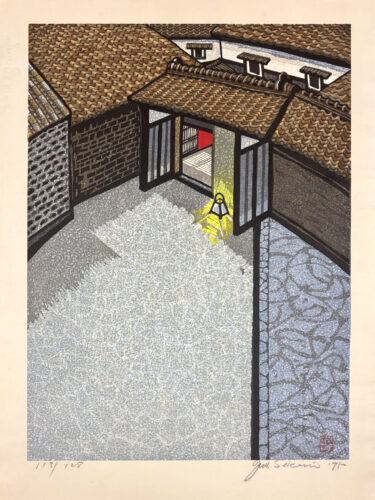
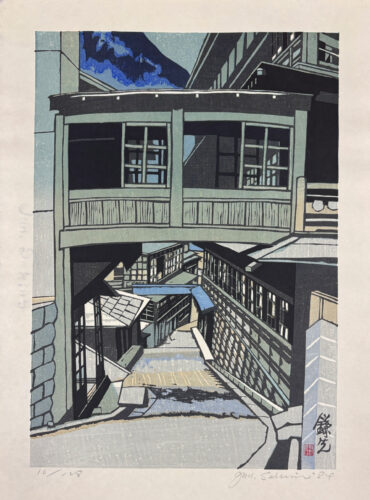
Following his travels in the United States and Europe in the late 1950s and 1960s, color became an increasingly important element of his work. His international experiences also led him to reconsider Japanese landscapes from a new perspective. Among his best-known works are his *Fifty-Three Stations of the Tōkaidō* and *Oku no Hosomichi* series, in which traditional Japanese landscapes and travel routes are reinterpreted through a modern graphic vocabulary.
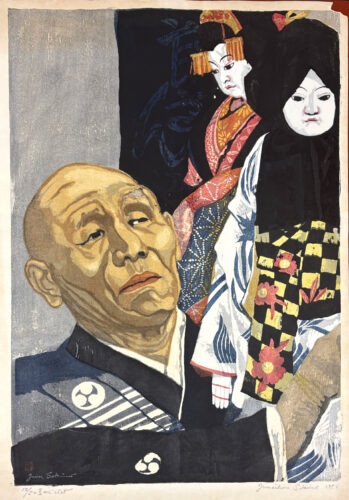
Sekino also produced numerous portraits, including portraits of artists and cultural figures such as Onchi Kōshirō and Munakata Shikō. His works are held in major collections in Japan and abroad, including the Aomori Museum of Art, the Museum of Fine Arts, Boston, and the British Museum.
Artist Jun'ichirō Sekino
Born: October 23, 1914, Aomori, Japan
Died:April 13, 1988, Tokyo, Japan
Field:Printmaking
**Movement:** *Sōsaku Hanga* (Creative Print Movement)